Homing In
The Art and Science of Radio Direction Finding (RDF)
Since 1988
Provided by Joe Moell, ham radio callsign KØOV. (That's K-zero-O-V)


Latest RDF News Headlines
 It had been 26 years since a championship ARDF event took place in the Pacific Northwest, but again this summer, radio-orienteers hunted transmitters in the forest of west central Oregon near Portland. Mt. Hood Orienteering hosted the 25th USA Radio-Orienteering Championships August 12 - 16, 2026. It was also the 13th ARDF Championships of IARU Region 2 (North and South America). USA's Championships are open to anyone at any skill level, with or without a ham radio license. Visiting competitors from other nations are welcome. The story of these championships and a link to the results are in this Homing In site.
 Results and photos of the annual "Antennas In The Park" on-foot transmitter hunting session and barbecue in Fullerton on Saturday, May 9, 2026 and the two-meter on-foot hunt at Kearny Mesa Community Park in San Diego on Saturday, May 16 are now in this site. Watch this site for announcements of the next southern California session. For earliest notification of these events, you can join the southern California ARDF mailing list. If you live elsewhere, click to get contacts for other North America ARDF sessions.
 Team USA has won medals the 22nd IARU World Championships, which took place in Birstonas, Lithuania from August 16 through 22, 2025. There were separate classic ARDF events on separate days for national teams on eighty meters and two meters, plus competitions in sprints and foxoring. This time, 19 persons were on USA's team, including twelve men in IARU categories M21 through M70 and seven women in categories W35 through W65. Read more about USA's participation in the World Championships here.
 Congratulations to two USA radio-orienteers who won medals in the 2025 ARDF World Cup, which was combined with the ARDF Cup of Balkan Countries and the Cup of Serbia. Events took place from July 28 through August 1 in Frushka Gora, a mountain resort in Syrmia, Serbia. In the category for men ages 50 and older, Alexander Myachin won gold in the eighty-meter classic competition, silver in the sprint competition and bronze in the two-meter classic competition. In the category for girls ages 16 and younger, Anastasia Afonkin won gold in the two-meter classic competition. Four days of training courses preceded the championships.
 The 24th USA Radio-Orienteering Championships took place during June 2025 in the beautiful Uwharrie Mountains of North Carolina. A full week of activities included five days of training, practice and equipment checks, followed by competitions in foxoring, sprint and classics on two meters and eighty meters. Sponsoring organization was the Backwoods Orienteering Klub. USA's championships are open to anyone of any age who can safely navigate in the woods with hand-held radio gear for several kilometers. An Amateur Radio license is not a requirement. This was an opportunity to qualify for ARDF Team USA's trip to the 2025 ARDF World Championships. A detailed report and links to results and photos are here.
 ARRL's ARDF Co-coordinator Charles Scharlau NZØI reports that Robert Haddow VE3JT/VE3RXH of Kemptville, Ontario has been appointed to the position of ARDF Coordinator for Radio Amateurs of Canada, which is the Canadian national Amateur Radio society. Robert succeeds Joe Young VE7BFK, who has served in that position since 2002. Robert is a skilled radio-orienteering competitor who has been a frequent participant in the ARDF championships of USA and IARU Region 2 (North and South America). Read more about Canadian ARDF in this Homing In site.
 Measuring-tape yagis are the newcomers' favorite direction-finding antenna for tracking down hidden two-meter transmitters on foot. They are easy to build, sensitive and accurate. With a 3D printer, you can make your antenna even better with element clamps, a hand grip, attenuator enclosure and radio cradle. These add-ons will help you be faster and more efficient. Learn how in the new 3D parts page of this Homing In site.
 In honor of the 200th anniversary of Christian Doppler's birth, I wrote a series of Homing In columns that appeared in 73 and CQ-VHF Magazines. In addition to a deep dive into the theory behind VHF/UHF Doppler RDF sets, it highlights the often-overlooked design considerations that greatly affect performance in mobile installations. Those columns have been added to this site, starting with Part 1. If you have or are considering a Doppler RDF set for transmitter hunting, this series will help you choose wisely and get the best results.
 Want to find transmitter hunts taking place in your locality? Long-time enthusiast Byon Garrabrant N6BG has begun publishing a list of regularly-scheduled hunts, both mobile and all-on-foot, at foxhuntlist.com. He welcomes submissions from anywhere in the USA. There is also a calendar of nationwide on-foot radio-orienteering sessions maintained by Backwoods Orienteering Klub. This Homing In site will continue to post details of upcoming and past on-foot transmitter hunts in southern California.
 Learn about international-rules on-foot hunting (ARDF, radio-orienteering) and how the sport is organized
Obtain RDF equipment for two-meter hunting on foot
Attend a southern California on-foot transmitter hunt
Participate in national and world championship hunts
Learn about mobile transmitter hunting (T-Hunting) and the equipment that hunters use
Attend a southern California two-meter mobile T-hunt
Buy or build a two-meter "fox" transmitter 
Learn about 80-meter transmitter hunting
 More and more hams and orienteers are discovering the fun of tracking down hidden transmitters out in the woods. It's a worldwide sport with opportunities for friendly competition at home and abroad. A ham radio license isn't a requirement, but it makes it lots more fun. Learn the basics and get the international hunt rules at the "International Style Transmitter Hunting Comes to the Americas" page of this site.
 Easy-to-use apps can simplify bearing plotting and triangulation over short and long distances. Some are useful for both on-foot and mobile transmitter hunting. Bearings can be entered manually or with the internal device compass. Some apps allow entering bearings taken by other hunters or networing with them during the hunt. Two apps have an RS-232 interface to Doppler RDF sets. Read all about SigTrax Plus, Map-n-Compass, GoogleHunt and DoppSite apps in this compilation of Homing In column reviews.
 Mobile hidden transmitter hunters have regularly prowled the streets in search of the elusive sources of unusual signals for more than four decades. Equipment has evolved, but the adventure and intrigue remain the same. Read "T-Hunting Then and Now -- From Gooney Birds to GPS" in this site for stories of classic mobile T-hunts in the Los Angeles area. Some of them, but not all, could be done again today. Then to find out what it's like nowadays, and to help get your club started in this activity, read "Let's Go T-hunting."
 When it's your turn to hide the transmitter, what will you use? It depends on the range and duration of the hunt, as well as whether or not the transmitter must be unattended and automatic. It's important to match your foxbox and its location to the level of proficiency of the hunters. There are many options, and you can read about them in the Foxboxes for Mobile and On-foot Transmitter Hunts page in this site.
 For three decades, international-rules radio-orienteering competitions have had two classic competition days. Each participant must compete on the two-meter band and the 80-meter band. The 2012 USA and World ARDF Championships included competitions in two new events: sprints and foxoring. The sprint is a shortened form of the five-fox 80-meter ARDF run that's intended to be a demonstration for the public. Foxoring is a combination of classic orienteering and direction-finding on 80 meters. More information about these new events can be found here.
 For over twenty years, I have used a special cubical quad for mobile transmitter hunting on two meters. From inside the vehicle, I can select the signal polarization. Find out why this is important, why I like this antenna and how to make one for yourself in a classic Homing In column titled "Build a Multiple-Polarization Quad."
 The popular DF2020T Doppler RDF set by Global TSCM (and the MFJ-5005 clone) are sold out. This nearly-plug-and-play RDF system was a licensed version of PicoDoppp by Bob Simmons WB6EYV. For those who own a DF2020T or are considering buying a used one, this page of the Homing In site has a product review plus antenna grounding improvements for early versions. PicoDopp is still available as a set of populated circuit boards.
 The Agrelo DFjr Doppler RDF set has been out of production for over 25 years, but there is still a great deal of interest in it. DFjr was the first inexpensive plug-and-play Doppler set designed for interface to computer mapping systems and APRS. For those who own one or are considering buying a used one, the DFjr page on this site has a downloadable manual, my 73 Magazine review, antenna system improvements, and frequently asked questions about this product.

What's "Homing In?"
Homing In refers to the process of tracking down the source of a radio or other electromagnetic signal using radio direction finding (RDF) equipment.
Homing In is also the title of my regular column on RDF that ran for 15 years in 73 Amateur Radio Today magazine, then for ten years in CQ-VHF magazine and a year in CQ-Plus digital magazine. After that, it appeared four times per year in CQ Amateur Radio magazine. At this Homing In site, you will find more about these columns, plus RDF articles that I have written for other publications, including Monitoring Times, CQ VHF and QST magazines. There is also information about my comprehensive book on the subject.
 Radio direction finding is used to find sources of interference to any
form of wireless electronic communications, including broadcast and two-way
radio, television, and telephones. It is also used to track missing or stolen
cars and other property. Search and rescue workers use it to find persons in
distress. Emergency Locator Transmitters in downed aircraft are tracked with
RDF techniques.
Radio direction finding is used to find sources of interference to any
form of wireless electronic communications, including broadcast and two-way
radio, television, and telephones. It is also used to track missing or stolen
cars and other property. Search and rescue workers use it to find persons in
distress. Emergency Locator Transmitters in downed aircraft are tracked with
RDF techniques.
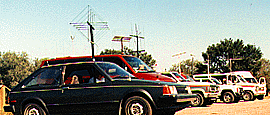
Most of the information at this site pertains to RDF equipment and techniques for Amateur Radio (ham) operators. Hams use RDF to track jamming stations and stolen equipment, but more often, they use it just for fun. Hidden transmitter hunting has been done by hams for about seventy years and it is a growing activity. T-hunting refers specifically to hunts involving hams driving in RDF-equipped vehicles. A mobile T-hunt is best described as hide-and-seek for all ages with radio gear. When you set out on a T-hunt, you never know where you'll end up, and you have no idea what you're going to find. No form of ham radio contesting is more fun! Mobile T-hunting is done in cities and towns all over the USA, and elsewhere in the world. Depending on the frequency band and the nature of the hunt, the hunters use loop, yagi, quad, doppler and time-difference-of-arrival RDF antenna systems mounted on their vehicles. Click here for for more information about mobile T-hunting.
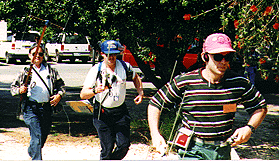 Mobile T-hunting is called foxhunting in some parts of the USA, but everywhere else in the world, the terms "foxhunting" and ARDF refer to another kind of RDF contest, done completely on foot in large woods and parks. It's a map-and-compass sport similar to orienteering, with about a half-dozen "fox" transmitters to find in a period of two hours or so. Someday this sport, which is also called foxtailing, fox-teering and radio-orienteering, may become an Olympic event. Meanwhile, it's a fun-filled activity for your hamfests and Scout Jamborees. Try it, and you may find yourself at the next annual national USA ARDF Championships. You might even become a member of ARDF Team USA, which has competed in five foxhunting World Championships. Click here for for general information about radio-orienteering or click here for beginner-level ARDF events in southern California.
Keep reading---you will find lots more about foxhunting, T-hunting, and other uses of RDF at this site.
What's at the Homing In Site?
Find your topic of interest below in the complete Table of Contents (or as some call it, the Site Map). Or you can Click here for the Site Search page.
 Getting Started -- The basics
RDF Topics in Print -- Read all about it
Home-built RDF Projects -- Inexpensive and educational
Commercial RDF Equipment -- Getting the most from it
Follow-up and Support -- for readers of THRDFS and Homing In
Championship Radiosports -- Taking on the world
Results, stories and photos of ARDF sessions, large and small
Volunteer Opportunities -- Use your RDF skills to help researchers and protect wildlife
Other resources
Spending a few minutes at this Homing In site will give you a jump-start into the world of transmitter hunting. After that, you can find out how to get involved in mobile T-hunts in your area by visiting local T-hunt/foxhunt web sites and contacting nearby Homing In Correspondents listed on the links page. You'll find manufacturers and suppliers of RDF gear there, too.
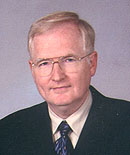
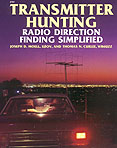
Joe collaborated with Tom Curlee WB6UZZ to write TRANSMITTER HUNTING---Radio Direction Finding Simplified, a comprehensive text on RDF, and has written almost 300 published articles on the subject, including his monthly Homing In columns that ran for 15 years in 73 Amateur Radio Today magazine, then for ten years in CQ-VHF magazine, for one year in CQ-Plus digital magazine and then four times per year in CQ Magazine. As a Technical Advisor to ARRL Headquarters, he authored a chapter on RDF for The ARRL Handbook and has made more than 100 presentations on transmitter hunting to clubs, conventions, classes and seminars. As time permits, he is available for private engineering consulting.
Joe and April (WA6OPS) Moell are graduates of the University of Nebraska. They have served as organizers, course marshals and jurors at international-rules foxhunting championships.
 Having problems browsing here? No pages are "under construction," but linking errors and server glitches can occur. If you get an error message when attempting to link to a page at this site, please send e-mail to me, stating which page you could not access. Also please report any stale links you encounter or any problems in displaying these pages. They are designed to look good and load rapidly on any browser version and at any screen resolution. They're printer-friendly, too. No cookies, frames, fancy backgrounds, pop-up windows, animations, Google ads, affiliate schemes, background music, tickers, sponsored links, third-party banners or AI-generated content on my pages --- just an abundance of original and useful information, suitable for all ages. I don't ask you to buy me a coffee, feed a tip jar or support me on Patreon. My privacy policy is very simple: I don't collect any information about you when you surf here. If you send me an e-mail inquiry or buy a book, I won't give your e-mail address or other information to anyone else without your permission.
 Surfing suggestion: For a quick start into the world of mobile and on-foot hidden transmitter hunting, jump to Give Foxhunting a Try.
Please note that this Web site is built and maintained independently by Joe Moell. It is not sponsored by or affiliated with CQ Publications, 73 Amateur Radio Today, Wayne Green Enterprises, TAB/McGraw-Hill, ARRL, or any other commercial or non-commercial entity. All content is protected by applicable intellectual property laws.
Entire site Copyright © 1996-2026 Joseph D. Moell. Text, photos and original graphics may not be served or reproduced elsewhere without permission.


 Contact info:
Joe Moell
PO Box 2508
Fullerton, CA 92837
k0ov@homingin.com

This page updated 26 August 2026